The Palace of Winds: Secrets of Hawa Mahal
·5 min read
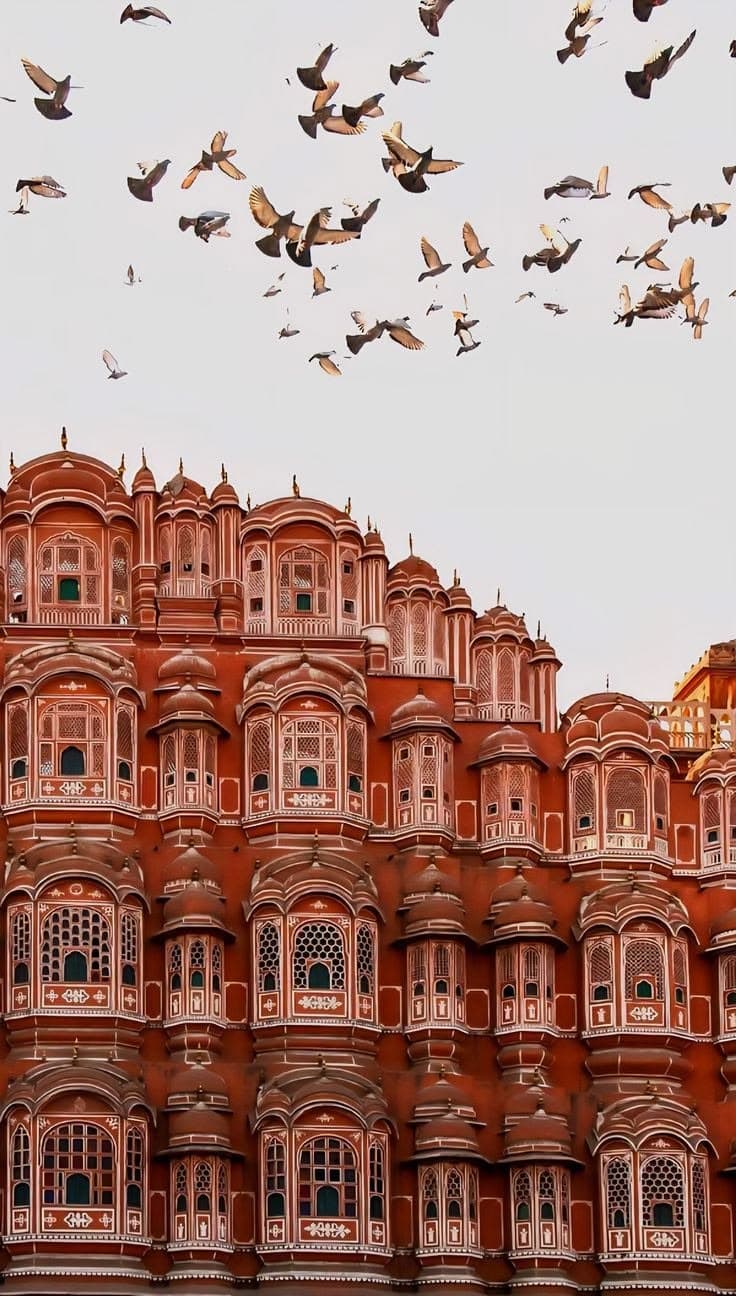
The Honeycomb Palace of the Pink City
Hawa Mahal — the Palace of Winds — is arguably the most photographed building in Jaipur. Built in 1799 by Maharaja Sawai Pratap Singh, this five-storey structure has 953 small windows (jharokhas), each adorned with intricate latticework.
The name "Palace of Winds" comes from the constant breeze that flows through its honeycomb facade, keeping the interior cool even in Jaipur's harsh summers. The building has no foundation in the traditional sense — it is essentially a curved wall, just one room deep at the top floors.
Why Was It Built?
Hawa Mahal was built as an extension of the City Palace's zenana (women's quarters). Royal women of the Rajput court observed strict purdah and could not appear in public. The latticed windows allowed them to watch processions, markets, and everyday street life on Johari Bazaar below — without being seen.
The building's pink sandstone colour, matching the rest of the old city, was ordered by Maharaja Sawai Ram Singh II in 1876, when Jaipur was painted pink to welcome the Prince of Wales.
Visiting Hawa Mahal
Hawa Mahal is located on the main road of the old city, along the edge of the City Palace complex. The Gariba Tours sightseeing bus stops directly in front of the monument, making it one of the easiest landmarks to access.
Entry fee: ₹50 for Indian nationals, ₹200 for foreign tourists. The rooftop offers excellent views of Jantar Mantar and the City Palace.
Best photo spot: For the iconic front-facade shot, stand across the road in the early morning when the east-facing wall catches golden sunlight.
Explore Jaipur with Gariba Tours
Book a guided sightseeing bus tour covering all major Jaipur landmarks. AC, non-AC, and double-decker options from ₹250/person.
Book Your Tour